Monitor
Continuous, property-specific wildfire intelligence — all year, all season.
A Single Snapshot Won’t Protect a Property
A property’s wildfire risk is never static. Vegetation grows, conditions shift, structures and surroundings change, and fire activity moves across the landscape. An assessment captures a property at one moment in time — but the risk keeps evolving.
FortressFire’s AMP Platform closes that gap. We monitor each enrolled property continuously, integrating satellite imagery, weather and fire-weather models, vegetation health data, condition changes, and active wildfire tracking to deliver property-specific intelligence to the people responsible for protecting it — before conditions escalate.


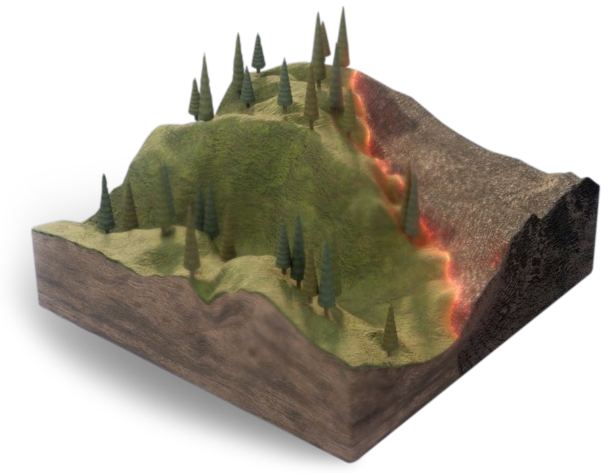
Monthly Health Snapshots
Each month, property owners — and, where applicable, their insurers — receive a Wildfire Health Snapshot: a clear, plain-language summary of the property’s current vulnerability indicator, recent elevated fire conditions, regional fire activity, and any changes detected since the last report. It’s a simple, consistent way to know exactly where a property stands.
What We Watch
Our monitoring is built around the conditions that actually drive ignition risk at the individual property level:
- Hot-Dry-Windy Conditions: Property-level tracking that combines temperature, humidity, and wind into a daily picture of fire-weather risk.
- Vegetation Stress: Satellite analysis of moisture content and fuel conditions around the property.
- Active Fire Activity: Real-time tracking of nearby wildfire location and projected spread during fire season.
- Ember Risk: Predictive modeling of ember transport from active fires — the leading cause of structure ignition.
- Property Change Detection: Identification of structural changes, vegetation regrowth, and accumulation of moveable fuels that can quietly erode a property’s mitigated state.
Alerts When Conditions Change
Monitoring matters most at the moments risk spikes. When conditions cross defined thresholds, FortressFire issues targeted alerts with enough lead time to act:
- Elevated Fire Condition Alerts: When hot, dry, windy weather and vegetation stress combine to raise risk.
- Fire Perimeter Alerts: When an active fire is forecast to threaten the property’s area.
- Ember Alerts: When ember transport from an active fire front becomes a risk.
- Property Change Alerts: When detected changes warrant a review of the property’s plan. Each alert is paired with recommended actions, so the people already responsible for the property know not just that something has changed, but what to do about it.

Get in Touch
Contact us to learn more about our platform, programs, and services.